Creating a beautiful home does not always require expensive furniture, professional designers, or major renovations. With thoughtful planning, creative ideas, and a few practical changes, we can transform ordinary rooms into comfortable, stylish, and welcoming spaces. Decoration is about finding the right balance between appearance, functionality, comfort, and personal style.
Whether we are refreshing a living room, updating a bedroom, improving a kitchen, or decorating an outdoor area, small details can make a remarkable difference. Choosing suitable colors, arranging furniture correctly, adding attractive lighting, and incorporating natural elements can completely change how a space looks and feels.
With Decoration Tips and Tricks DecoradYard, we can explore practical decorating techniques that make every corner of a home more attractive without unnecessary expenses. From simple DIY projects to modern interior styling, these ideas help homeowners create spaces that reflect their personality while maintaining everyday comfort.
1. Start with a Clear Decoration Plan
Before purchasing furniture or decorative accessories, we should understand the purpose of each room. A well-organized decoration plan helps us avoid unnecessary expenses and maintain a consistent appearance throughout the home.
Start by identifying the main function of the space. A living room may need comfortable seating and entertainment areas, while a bedroom should prioritize relaxation and privacy. Similarly, kitchens require practical storage, accessible countertops, and sufficient lighting.
We should also measure the available space before purchasing furniture. This prevents overcrowding and makes it easier to select suitable pieces. Creating a simple color palette and deciding on a decorating style can further improve the overall design.
Important planning tips include:
-
Measure rooms and furniture before making purchases.
-
Identify the main purpose of every space.
-
Choose two or three complementary colors.
-
Set a realistic decoration budget.
-
Prioritize essential furniture and accessories.
-
Leave enough walking space around furniture.
A thoughtful plan gives us a strong foundation for creating an attractive and functional home.
2. Choose the Right Colors for Every Room
Color is one of the most powerful elements of interior decoration. It influences the atmosphere of a room, changes how large or small a space appears, and helps different design elements work together.
Light colors such as white, cream, beige, and soft grey can make smaller rooms feel brighter and more spacious. On the other hand, darker shades such as navy blue, forest green, and charcoal can create depth and sophistication when used carefully.
We should consider the amount of natural light available before selecting wall colors. Rooms with limited sunlight generally benefit from lighter shades, while brighter rooms can accommodate deeper tones.
An effective approach is to follow the 60-30-10 color rule:
-
60% dominant color: Used for walls and larger surfaces.
-
30% secondary color: Applied to furniture, curtains, and rugs.
-
10% accent color: Added through cushions, artwork, and accessories.
This simple technique creates visual balance without making the room look overly complicated.
3. Transform Your Living Room with Smart Decorating
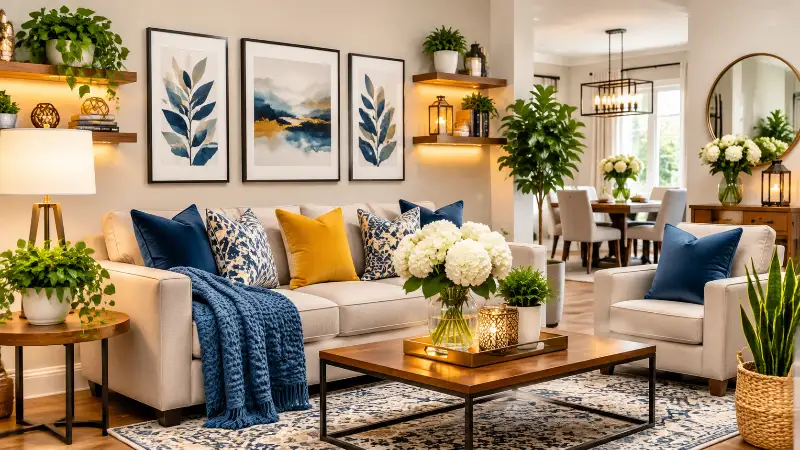
The living room is often the most frequently used area of a home. It is where families relax, entertain guests, watch television, and spend time together. Therefore, its decoration should combine comfort with attractive visual details.
We should begin by arranging furniture according to the room’s layout. Sofas and chairs should encourage conversation while maintaining enough space for movement. Instead of pushing every piece against the walls, we can create a balanced seating arrangement around a central table or focal point.
A beautiful area rug can define the seating zone and make the room feel more connected. Decorative cushions, stylish curtains, and carefully selected artwork can introduce color and personality.
Lighting also plays an important role. Combining ceiling lights, floor lamps, and table lamps creates different levels of illumination for various activities.
Practical living room decorating ideas:
-
Use a statement mirror to create a sense of openness.
-
Add decorative cushions with complementary patterns.
-
Choose a rug that fits the seating arrangement.
-
Display artwork at an appropriate height.
-
Introduce indoor plants for natural freshness.
-
Keep unnecessary accessories to a minimum.
These simple improvements can give an ordinary living room a polished and welcoming appearance.
4. Make Your Bedroom Comfortable and Stylish
A bedroom should provide a peaceful environment where we can relax and recharge. Its decoration should focus on comfort, simplicity, and a calming atmosphere.
Start with the bed because it is usually the main focal point. Choose comfortable bedding in colors that complement the walls and surrounding furniture. Layering different textures through blankets, cushions, and soft fabrics can make the bed look more inviting.
Bedside tables provide useful storage and convenient surfaces for lamps, books, and personal belongings. We should avoid filling these surfaces with unnecessary decorations because clutter can make the bedroom feel smaller.
Curtains are another important feature. Blackout curtains can help control incoming light, while lighter fabrics create a softer appearance.
For a peaceful bedroom design, consider:
-
Neutral wall colors and comfortable bedding.
-
Warm bedside lighting.
-
Functional wardrobes and storage organizers.
-
Soft rugs beside the bed.
-
Minimal decorative accessories.
-
Natural materials such as cotton, linen, and wood.
A clean and organized bedroom can improve the overall atmosphere of the home.
5. Upgrade Your Kitchen with Functional Decoration
The kitchen deserves as much decorating attention as other areas of the home. A beautiful kitchen should also support cooking, cleaning, food preparation, and daily household activities.
We can improve its appearance through organized storage, attractive accessories, and suitable lighting. Open shelves are useful for displaying selected dishes, glassware, and decorative containers. However, they should remain organized to prevent a crowded appearance.
Cabinet handles are small details that can create a noticeable improvement. Replacing outdated handles with modern designs can refresh kitchen cabinets without requiring a complete renovation.
Backsplashes also provide an opportunity to introduce texture and color. Simple tiles, natural stone patterns, or easy-to-clean surfaces can make the kitchen more attractive.
Affordable kitchen decoration ideas include:
-
Organize countertops using matching containers.
-
Add under-cabinet lighting for better visibility.
-
Use decorative jars for everyday ingredients.
-
Introduce small indoor plants near suitable windows.
-
Refresh cabinet handles and hardware.
-
Keep frequently used cooking tools accessible.
Combining practical storage with attractive styling creates a kitchen that looks beautiful and works efficiently.
6. Use Lighting to Improve Your Home’s Appearance
Lighting can completely change the appearance of an interior space. Even well-decorated rooms may look unattractive when they lack suitable illumination.
We should use a combination of three main lighting types to achieve a balanced result.
Ambient lighting provides general illumination throughout the room. Ceiling fixtures, recessed lights, and chandeliers are common examples.
Task lighting focuses on specific activities. Desk lamps, kitchen counter lights, and bedside reading lamps help improve visibility where needed.
Accent lighting highlights decorative features such as artwork, architectural details, shelves, or indoor plants.
Whenever possible, we should maximize natural daylight by keeping windows clean and avoiding unnecessarily heavy window coverings.
Warm lighting is often suitable for bedrooms and relaxing living spaces, while brighter neutral lighting can be useful in kitchens, workspaces, and study areas.
7. Bring Nature Indoors with Indoor Plants
Indoor plants are an excellent way to introduce natural beauty into home decoration. They add color, texture, and visual interest while helping create a refreshing environment.
Plants such as snake plants, pothos, spider plants, and peace lilies are popular indoor choices. However, we should select varieties according to available sunlight, temperature, watering requirements, and household conditions.
We can display plants on shelves, windowsills, side tables, or decorative stands. Hanging planters are especially useful in smaller rooms because they add greenery without occupying valuable floor space.
Natural materials can further strengthen this decorating approach. Wooden furniture, bamboo accessories, woven baskets, and cotton fabrics create a warm connection between indoor spaces and nature.
When using plants, avoid overcrowding rooms and ensure that every variety receives appropriate care.
8. Decorate Your Home on a Limited Budget
A beautiful home does not have to be expensive. Many impressive decorating improvements can be completed using existing furniture, affordable accessories, and creative DIY projects.
Before purchasing new items, we should look at what is already available. Repainting an old table, changing cabinet handles, rearranging furniture, or replacing outdated cushion covers can refresh a room at a relatively low cost.
Thrift stores and local markets can also provide affordable decorative pieces. We should focus on quality, usefulness, and compatibility with the existing interior rather than purchasing items simply because they are inexpensive.
Some budget-friendly improvements include:
-
Repaint an old furniture piece in a modern shade.
-
Create a simple gallery wall using affordable frames.
-
Replace outdated curtains with lighter fabrics.
-
Reuse glass jars as decorative storage containers.
-
Rearrange existing furniture for a fresh layout.
-
Add affordable cushions and decorative throws.
-
Create DIY wall decorations using simple materials.
These practical ideas make Decoration Tips and Tricks DecoradYard especially useful for homeowners who want attractive results without spending beyond their budget.
9. Improve Small Spaces with Creative Solutions
Decorating a small home requires careful planning because every corner matters. Poor furniture placement, excessive accessories, and unsuitable storage can make limited spaces feel even smaller.
We should choose furniture that serves multiple purposes. Storage beds, foldable tables, nesting tables, and compact seating can provide functionality without taking up unnecessary room.
Mirrors are another useful decorating feature. When positioned thoughtfully, they reflect light and create an impression of greater depth.
Vertical storage can also help us use available space more efficiently. Wall-mounted shelves, tall cabinets, and hanging organizers keep floors clear while providing additional storage.
For smaller rooms, we should consider:
-
Light wall colors to create an open appearance.
-
Furniture with visible legs to maintain visual space.
-
Sliding doors where suitable.
-
Multi-functional furniture.
-
Wall-mounted storage solutions.
-
Minimal decorative accessories.
The goal is to make every area useful without sacrificing comfort or visual appeal.
10. Add Personality Through Decorative Accessories
Accessories help transform a simple room into a space that feels personal and complete. They provide opportunities to introduce colors, textures, memories, and individual preferences.
Artwork, framed photographs, decorative bowls, candles, cushions, and carefully selected ornaments can make interiors more interesting. However, we should avoid displaying too many objects in one area.
A useful decorating technique is to group accessories in odd numbers, such as three or five. Different heights and textures can make these arrangements more visually appealing.
Wall art should complement the room’s existing color scheme and furniture style. Large artwork can create a strong focal point, while smaller framed pieces work well in coordinated gallery arrangements.
We should also include meaningful objects that reflect personal interests, family memories, or cultural traditions. These details make a home feel welcoming rather than like a showroom.
11. Refresh Outdoor Areas and Garden Spaces
Outdoor decoration is another important part of creating an attractive property. Gardens, patios, balconies, and entrance areas can become comfortable extensions of indoor living spaces.
Start by cleaning the outdoor area and removing unnecessary clutter. Then consider adding suitable seating, weather-resistant furniture, decorative planters, and outdoor lighting.
Plants and flowers can introduce natural colors and improve the appearance of balconies and gardens. For smaller outdoor spaces, vertical gardens and hanging planters provide greenery without requiring large planting areas.
Outdoor lighting can improve visibility and create an inviting atmosphere during the evening. Solar-powered garden lights are one practical option for suitable locations.
We should always choose outdoor materials according to local weather conditions. Furniture, fabrics, and decorative accessories must be suitable for exposure to sunlight, rain, and changing temperatures.
12. Maintain a Clean and Organized Decoration Style
Good decoration is not only about adding beautiful things. It also involves maintaining cleanliness, organization, and visual balance.
Even expensive furniture and accessories can lose their appeal when surrounded by clutter. Regular cleaning and thoughtful storage help preserve the appearance of every room.
We should create simple organization habits, such as returning items to their proper places, cleaning surfaces regularly, and removing objects that no longer serve a purpose.
Storage baskets, decorative boxes, drawer organizers, and closed cabinets can help maintain a neat appearance.
A consistent decorating style also makes the entire home feel connected. We do not need identical furniture or colors in every room, but repeating certain materials, finishes, or accent shades can create a harmonious interior.
Conclusion
Creating a beautiful home is a process that combines creativity, practical planning, and thoughtful design choices. From choosing suitable colors and arranging furniture to improving lighting, organizing storage, and introducing natural elements, every small improvement contributes to a more comfortable living environment.
We can achieve impressive results without major renovations by focusing on affordable updates and making better use of existing spaces. Whether we are decorating a small apartment, refreshing a family home, upgrading a kitchen, or improving an outdoor garden, the right approach makes a noticeable difference.
With Decoration Tips and Tricks DecoradYard, homeowners can discover practical inspiration for transforming everyday spaces into attractive, functional, and welcoming environments. By combining personal style with smart decorating decisions, we can create a home that remains beautiful, organized, and comfortable for years to come.Click here see more detail…