Every home deserves a comfortable, welcoming, and visually appealing environment. Decorating a home is not simply about purchasing expensive furniture or following the latest interior design trends. It is about creating a space that reflects personal taste, supports everyday activities, and makes everyone feel comfortable. With thoughtful planning, creative ideas, and practical solutions, we can transform ordinary rooms into beautiful living spaces without spending too much money.
Decoration Ideas Decoradyard provides inspiration for improving different areas of the home through creative styling, attractive color combinations, functional furniture, lighting, and carefully selected decorative accessories. Whether we are decorating a small apartment, renovating an older house, or refreshing a single room, the right approach can make a noticeable difference.
In this complete guide, we explore practical home decoration ideas that combine beauty, comfort, functionality, and affordability.
1. Start with a Clear Home Decoration Plan
Before purchasing decorative items or rearranging furniture, we should create a simple decoration plan. Understanding the available space, identifying our priorities, and establishing a realistic budget can prevent unnecessary expenses.
Begin by examining each room and identifying what needs improvement. Some spaces may require better lighting, while others might benefit from additional storage, new curtains, or updated furniture arrangements.
Consider these important planning steps:
- Identify your decorating goals: Decide whether you want a modern, traditional, minimalist, rustic, or contemporary appearance.
- Set a realistic budget: Allocate money for essential improvements before purchasing optional accessories.
- Measure available space: Check room dimensions before selecting furniture, rugs, or decorative pieces.
- Choose a consistent theme: Maintain a connection between different rooms through complementary colors and materials.
- Prioritize functionality: Make sure every decorative improvement supports comfortable everyday living.
A well-organized plan helps us achieve attractive results while avoiding unnecessary purchases.
2. Choose the Right Color Combinations
Colors have a significant influence on the overall appearance and atmosphere of a home. The right combination can make a room feel brighter, more spacious, relaxing, or energetic.
Neutral shades such as white, beige, cream, and light gray provide an excellent foundation for different decorating styles. We can introduce additional personality through accent walls, colorful cushions, artwork, and decorative accessories.
Popular Home Decoration Colors
White and Beige: These colors create a clean, peaceful, and timeless appearance. They work particularly well in bedrooms, living rooms, and smaller spaces.
Gray and White: This combination offers a sophisticated contemporary look. Wooden furniture and warm lighting can prevent the space from feeling too cold.
Green and Natural Wood: Green shades bring a refreshing natural appearance indoors. They complement wooden furniture, indoor plants, and neutral backgrounds.
Blue and Cream: These shades create a calm and welcoming atmosphere, making them suitable for bedrooms and relaxation areas.
When selecting colors, we should consider natural lighting, existing furniture, flooring, and room dimensions. Testing paint samples before applying them to entire walls can also help us make better decisions.
3. Create a Beautiful and Comfortable Living Room
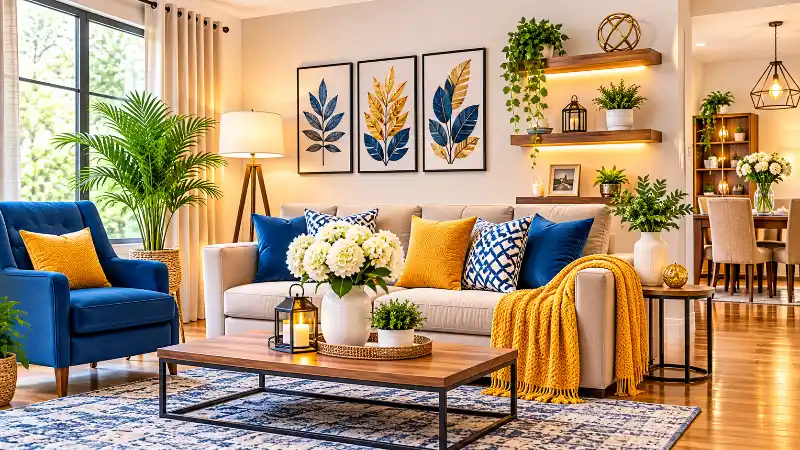
The living room is often one of the most frequently used areas of a home. It serves as a gathering place for family members, friends, and visitors. Therefore, its decoration should balance visual appeal with everyday comfort.
Start with the main furniture arrangement. Position sofas and chairs in a way that encourages conversation while leaving enough room for movement.
A comfortable living room can include:
- A stylish sofa with coordinated cushions.
- A central coffee table with a simple decorative arrangement.
- A soft area rug that complements the furniture.
- Wall artwork or framed photographs.
- Indoor plants for a natural touch.
- Attractive curtains that coordinate with the overall color scheme.
- Floor or table lamps for additional lighting.
Add Personality with Wall Decoration
Empty walls can make a room appear unfinished. We can improve them with framed artwork, family photographs, decorative mirrors, or carefully arranged wall shelves.
A gallery wall is another attractive option. Combining photographs, illustrations, and simple frames creates a personalized display.
However, we should avoid overcrowding the walls. Leaving some open space helps maintain a balanced appearance.
4. Upgrade Your Bedroom with Simple Decorating Ideas
A bedroom should provide a peaceful and comfortable environment. Its decoration should focus on relaxation, organization, and personal preferences.
Start by selecting bedding that complements the wall color and furniture. Soft neutral shades, comfortable pillows, and coordinated blankets can create a welcoming appearance.
Practical Bedroom Decoration Tips
Improve the Bedding: Choose attractive bedsheets, pillow covers, and blankets that work together. Layering different textures adds depth without making the room look crowded.
Decorate the Headboard Wall: A simple accent wall, wooden panels, or framed artwork can create an attractive focal point.
Use Suitable Lighting: Bedside lamps and warm lighting create a relaxing atmosphere during the evening.
Keep Furniture Organized: Select bedside tables, wardrobes, and storage furniture according to available space.
Introduce Natural Elements: Small indoor plants or wooden accessories can add warmth and character.
For smaller bedrooms, multifunctional furniture and wall-mounted shelves can provide additional storage without occupying too much floor space.
5. Transform Your Kitchen with Functional Decoration
A kitchen should be attractive, organized, and easy to maintain. Since it is used for food preparation and daily household activities, practical design choices are especially important.
One of the easiest improvements is organizing countertops. Keep frequently used items accessible while storing unnecessary objects inside cabinets.
Consider these kitchen decorating improvements:
- Install attractive cabinet handles.
- Use matching storage containers.
- Add suitable lighting above work surfaces.
- Organize utensils with drawer dividers.
- Introduce a small indoor herb garden.
- Use decorative backsplashes where appropriate.
- Keep countertops clean and organized.
Choose Practical Kitchen Colors
White cabinets create a fresh appearance, while natural wood finishes add warmth. Gray, cream, and soft green are also attractive choices for modern kitchens.
We should select materials that are easy to clean and suitable for everyday kitchen use. Beautiful decoration becomes more valuable when it also makes daily activities easier.
6. Improve Your Bathroom with Small Decorative Changes
Bathrooms do not require expensive renovations to look attractive. A few carefully selected improvements can create a cleaner and more organized environment.
Start by improving storage and removing unnecessary items from countertops.
Useful bathroom decoration ideas include:
- Matching soap dispensers and toothbrush holders.
- Coordinated towels and bath mats.
- Wall-mounted storage shelves.
- Attractive mirrors.
- Suitable moisture-resistant lighting.
- Small decorative accessories.
- Easy-to-clean storage baskets.
Plants suitable for humid indoor environments can also introduce a natural appearance, provided the bathroom receives appropriate light and ventilation.
We should prioritize moisture-resistant materials and proper ventilation to maintain a comfortable and hygienic bathroom.
7. Use Indoor Plants to Bring Nature Inside
Indoor plants are an excellent way to introduce natural beauty into different areas of the home. They add color, create visual interest, and complement many decorating styles.
Popular indoor plant choices include snake plants, pothos, spider plants, and peace lilies. Their suitability depends on available light, temperature, and watering requirements.
Creative Ways to Display Indoor Plants
Decorative Plant Pots: Choose pots that complement furniture and wall colors.
Floating Shelves: Place small plants on wall shelves to create attractive displays.
Corner Arrangements: Use suitable floor plants to decorate empty corners.
Hanging Planters: Hanging containers can introduce greenery without occupying valuable floor space.
Kitchen Herb Gardens: Grow suitable herbs near a bright kitchen window for convenient access.
When arranging plants, we should consider their individual care requirements and avoid placing them where they obstruct movement.
8. Make Small Spaces Look More Spacious
Decorating small homes and apartments requires thoughtful furniture selection and effective space management. The objective is to create an open, organized environment without sacrificing comfort.
Mirrors can help reflect natural light and create a greater sense of openness. Light-colored walls, simple furniture, and uncluttered surfaces also contribute to a spacious appearance.
Smart Solutions for Small Homes
- Choose furniture that serves multiple purposes.
- Use vertical shelves to increase storage.
- Select curtains that allow sufficient natural light.
- Avoid oversized furniture.
- Use sliding doors where practical.
- Keep decorative accessories limited.
- Organize belongings with baskets and storage boxes.
For example, a storage ottoman can provide seating and additional storage simultaneously. Similarly, a wall-mounted desk can create a useful workspace without taking up much floor area.
9. Improve Home Lighting for a Better Atmosphere
Lighting is one of the most important elements of interior decoration. It affects how furniture, wall colors, textures, and decorative accessories appear.
A well-designed lighting arrangement combines natural light with different types of artificial lighting.
Three Main Types of Home Lighting
Ambient Lighting: Provides general illumination throughout a room. Ceiling lights and suitable fixtures are common examples.
Task Lighting: Supports specific activities such as reading, cooking, studying, and working.
Accent Lighting: Highlights artwork, architectural details, decorative shelves, and other attractive features.
We should make the best possible use of natural daylight by keeping windows unobstructed and selecting suitable curtains.
Warm lighting generally creates a comfortable atmosphere in bedrooms and living rooms, while brighter task lighting is useful in kitchens and workspaces.
10. Decorate Your Walls Creatively
Walls provide excellent opportunities to introduce personality and visual interest into a home. Instead of leaving every wall plain, we can use decorative techniques that complement the overall interior design.
Some attractive options include:
- Textured paint finishes.
- Wooden wall panels.
- Framed artwork.
- Decorative mirrors.
- Wallpaper with subtle patterns.
- Floating shelves.
- Family photo arrangements.
- Simple wall-mounted decorative pieces.
Accent walls are particularly useful when we want to create a focal point without decorating the entire room.
For a balanced result, we should select one main wall and use complementary accessories rather than filling every available surface.
11. Refresh Your Home with Affordable DIY Projects
Home decoration does not always require professional services or expensive products. Many improvements can be completed through simple do-it-yourself projects.
DIY decorating allows us to reuse existing materials, personalize our surroundings, and make gradual improvements according to our budget.
Easy DIY Decoration Projects
Reuse Old Glass Jars: Clean glass jars and use them as decorative containers for flowers, stationery, or small household accessories.
Refresh Old Furniture: Carefully repaint suitable furniture pieces or update their handles to create a different appearance.
Create Handmade Wall Art: Use simple frames and original artwork to decorate empty walls.
Make Decorative Cushions: Change cushion covers to introduce new colors and textures into the living room.
Organize with Storage Baskets: Use attractive baskets to organize blankets, magazines, and everyday household items.
Create Seasonal Displays: Arrange suitable decorations according to different seasons and special occasions.
Before starting a project, we should check the condition of the materials and use appropriate tools and protective equipment.
12. Select Curtains, Rugs, and Decorative Accessories
Small details often have a noticeable influence on the final appearance of a room. Curtains, rugs, cushions, and decorative accessories help connect different elements of an interior design.
Curtains
Select curtains according to window dimensions, privacy requirements, and available daylight. Lightweight fabrics work well in spaces where natural light is important, while thicker curtains can provide additional privacy.
Rugs
Area rugs help define different sections of a room and introduce texture. Choose a size that fits the furniture arrangement rather than selecting one that is too small.
Cushions
Cushions offer an affordable way to introduce new patterns and colors. Combining different textures can create an interesting arrangement without overwhelming the sofa.
Decorative Accessories
Vases, candles, clocks, trays, and small sculptures can add personality. We should select accessories carefully and leave enough open space to maintain a clean appearance.
13. Follow Seasonal Home Decoration Trends
Changing small decorative details according to the season can keep a home looking fresh throughout the year.
During spring, we can introduce fresh flowers, lighter fabrics, and natural colors. Summer decoration can include breathable materials and brighter accents.
Autumn offers opportunities to use warm shades, textured cushions, and comfortable blankets. During winter, layered fabrics, soft lighting, and cozy accessories can make living spaces feel more welcoming.
Seasonal decoration does not require replacing major furniture pieces. Changing a few accessories, cushion covers, table arrangements, or decorative items can create a noticeable difference.
14. Maintain a Clean and Organized Home
Even the most attractive interior design can lose its appeal when rooms become cluttered. Regular cleaning and organization are essential parts of successful home decoration.
We should develop simple habits that help maintain the appearance of every room.
- Return household items to their proper places.
- Clean decorative accessories regularly.
- Keep kitchen countertops organized.
- Wash curtains and cushion covers when needed.
- Remove damaged or unnecessary belongings.
- Organize wardrobes and storage cabinets.
- Keep floors and frequently used surfaces clean.
Storage solutions should be both practical and visually appealing. Closed cabinets, decorative baskets, and organized shelves help maintain a comfortable environment.
15. Decoration Ideas Decoradyard: Create a Home That Reflects Your Personality
The most successful home decoration projects combine personal style with practical design. Instead of copying every popular trend, we should identify the features that make a space comfortable and meaningful.
Decoration Ideas Decoradyard encourages a thoughtful approach to improving homes through creative arrangements, suitable colors, functional furniture, natural elements, and affordable decorating projects.
Every room has different requirements. A bedroom needs comfort, a kitchen needs organization, a living room benefits from welcoming furniture arrangements, and a bathroom requires practical storage and suitable materials.
We can achieve beautiful results by making gradual improvements, reusing existing belongings, selecting quality materials, and paying attention to small details.
Conclusion
Creating a beautiful home is a continuous process that involves creativity, planning, and practical decision-making. From choosing attractive color combinations to improving lighting, organizing furniture, decorating walls, and introducing indoor plants, small changes can significantly improve the appearance of everyday living spaces.
The best decorating approach is one that balances visual beauty with functionality and affordability. We do not need expensive furniture or complete renovations to create an inviting home. Thoughtful choices and consistent maintenance can make every room more comfortable and attractive.
By following these practical suggestions, we can develop a home that reflects our personality, supports our lifestyle, and provides a welcoming environment for family and visitors. Let creativity guide each improvement and make every corner of the home feel special.Click here see more detail…